The short answer: eggless baking is harder because eggs perform six different jobs in a recipe — structure, aeration, emulsification, moisture, richness and browning — and no single substitute does all six. Professional eggless bakers don't "replace the egg"; they re-engineer the recipe, choosing a different substitute for each function the egg was performing. That is a learnable system, and it is exactly what separates a dense, gummy eggless cake from one your customers can't tell apart from the original. Bakers work through the structural version of this problem in our community thread on why substituting into a genoise never quite works.
Ask any baker trained on European recipes to make their signature cake eggless, and you can watch confidence turn into confusion in real time. The sponge collapses. The mousse won't set. The cookies spread into puddles. This isn't a lack of talent — it's that most baking education treats the egg as a given, and almost nobody teaches what to do when it's gone.
In India, that's a serious professional gap. A large share of the cake-buying market — vegetarian households, Jain families, customers observing religious fasts — will only buy eggless. Master eggless at a professional level and you serve customers most trained bakers simply cannot. Fail to master it and you're locked out of the most dependable segment of Indian retail baking. We've written before about why India's market demands eggless skill; this article goes deeper into the technique itself — why it's hard, where it goes wrong, and the exact method professionals use to get it right.
What Do Eggs Actually Do in a Recipe? The Six Jobs
Before you can replace an egg, you need to know what you're replacing. US baking-science research has documented more than twenty distinct functions whole eggs perform in baked goods. For practical kitchen purposes, professionals group them into six:
1. Structure
Egg proteins coagulate at roughly 62–70°C, setting into a network that holds the crumb up as it cools. Remove the egg and the flour's gluten and starch have to carry that load alone — which they were never formulated to do in an egg-based recipe. This is why a "just leave the eggs out" experiment produces a cake that slumps in the centre the moment it leaves the oven.
2. Aeration
Whipped eggs trap air — it is the entire basis of a genoise, a chiffon, a soufflé. In foam-method recipes the egg is the leavening. The scale of this job is easy to underestimate: in controlled tests on angel food cake, batter made without eggs was measured at four times the density of the original. That's not a small quality dip; it's a different product.
3. Emulsification
Yolk lecithin binds fat and water into one stable batter. Without an emulsifier, batters split, bakes turn greasy or streaky, and creams refuse to come together. This job is invisible when it's working and catastrophic when it isn't.
4. Moisture
A large egg is roughly 75% water — around 37 grams — released gradually during baking. Take out three eggs and you've silently removed over 100 grams of liquid from the formula. Any substitution that ignores this leaves the bake dry before it even starts.
5. Richness and mouthfeel
Yolk fat carries flavour and produces the tender, almost custardy crumb that premium cakes are judged on. Substitutes that bind but bring no fat leave the result lean and papery.
6. Colour and browning
Egg proteins feed the Maillard reaction — the golden crust on a sponge, the lacquered shine of an egg-washed croissant. Eggless bakes need this rebuilt too, or they emerge pale and matte no matter how well they taste.
Here is the trap: a flax gel binds but doesn't aerate. Yogurt adds moisture and lift with soda, but no structure. Aquafaba aerates beautifully but brings zero richness. Every substitute covers one or two jobs and ignores the rest. That is why "swap in an egg substitute" produces mediocre results, and why eggless baking is a system, not a hack.
The compound effect: one removal, three simultaneous breaks
The six jobs don't fail politely, one at a time. Remove the eggs from a sponge and structure, moisture and emulsification all break in the same bake — and their symptoms overlap. A dense crumb might be missing lift, missing emulsification, or drowning in a binder; the surface evidence looks identical. This is the honest reason internet troubleshooting fails so often for eggless bakers: the advice addresses one job while the real culprit is another. Professionals cut through it by controlling variables — change one thing per test bake, keep written notes, and let the crumb tell you which system moved. It's slower than guessing for the first week and dramatically faster forever after.
Why Is Eggless Baking Genuinely Harder? The Engineering Answer
When you bake with eggs, six problems are solved before you start. When you bake without them, you are solving all six yourself — simultaneously, in one bowl, with ingredients that interact.
Three specific things make the eggless version of any recipe less forgiving than the original:
Narrower tolerances. An egg-based sponge forgives a sloppy measurement because egg protein papers over small errors in balance. Eggless formulas have no such buffer — five grams too much baking soda and the crumb is coarse and soapy; five too few and the cake is a brick. This is why serious eggless kitchens weigh everything in grams, always.
Interacting fixes. Solve aeration with extra baking soda and you've changed the batter's pH, which changes browning and taste. Solve moisture with fruit purée and you've added binding weight that fights your lift. In egg baking, fixes are independent; in eggless baking, every correction touches two other variables. Professionals learn the interaction map so their second attempt converges instead of chasing its own tail.
Failure shows up late. An eggless batter can look perfect in the bowl and fail in the oven, because the missing job — structural set — only gets tested at 70°C. You cannot taste-and-adjust your way through eggless baking the way you can with a curry. The formula must be right before the oven door closes.
None of this makes eggless baking mysterious. It makes it engineering — and engineering can be taught, which is precisely what separates bakers who've learned the system from those still guessing.
Six invisible jobs. One way to actually see them.
Where Eggless Recipes Fail: The 7 Classic Collapses
Every failed eggless bake is one of the six jobs going unfilled. Learn to read the failure and you know which job to fix — this diagnostic table is the one our chefs make students memorise before anything else:
| What you see | Which job went missing | The professional fix |
|---|---|---|
| Cake sinks in the centre after baking | Structure — nothing set before the gas escaped | Add starch or stronger flour; reduce soda; bake fully before opening the door |
| Dense, rubbery, "gummy" crumb | Aeration — a binder was used where lift was needed | Switch from purée/flax to an acid + soda system or whipped aquafaba |
| Batter splits; greasy or streaky bake Most misdiagnosed | Emulsification — no yolk lecithin holding fat and water together | Add yogurt or condensed milk; cream fat and sugar longer |
| Dry, crumbly texture by day two | Moisture — the egg's ~75% water was never restored | Audit total liquids; add milk/buttermilk; soak with syrup |
| Lean, papery mouthfeel | Richness — binding replaced, fat forgotten | Increase butter/cream; use condensed milk as part of the system |
| Pale, matte top that never browns | Browning — no protein feeding the Maillard reaction | Brush with milk-cream; add milk powder to the dry mix |
| Soapy taste with coarse, open holes | Nothing missing — too much of the fix (excess soda) | Weigh leaveners in grams; balance acid to soda precisely |
Notice something: three of the seven failures come from using the wrong category of substitute, and one comes from over-correcting. Most eggless disasters aren't caused by missing ingredients — they're caused by missing diagnosis.
The Function-First Method Professionals Use
The amateur approach: take an egg recipe, search "egg substitute," stir in mashed banana, hope. The result tastes of banana, bakes dense, and stales by morning. The professional approach never asks "what replaces an egg?" It asks "what was the egg doing?" — and it runs in four steps:
Identify the jobs
Read the method, not just the ingredients. Eggs whipped to ribbon = aeration is the job. Eggs stirred into melted chocolate = binding and richness. A chiffon and a brownie both say "3 eggs" — and need completely different replacements.
Substitute per function
Choose from the substitution map below: an acid-plus-soda system for lift, starches or condensed milk for binding and richness, aquafaba where a genuine foam is non-negotiable. Often two substitutes share the work one egg did.
Rebalance the formula
Removing eggs changes total moisture, fat and sugar percentages — so liquid quantities, bake times, temperatures and even pan sizes shift. This is the step every internet recipe skips, and the reason "verified" substitutes still fail in new recipes.
Test against the original
In a professional kitchen the eggless version isn't done when it's "okay for eggless." It's done when it stands next to the egg version and holds its own on crumb, moisture and flavour. That's the standard customers silently apply.
This method is why a trained eggless baker converts a new recipe in one or two attempts while a hobbyist burns through ten. The skill isn't memorising substitutes — it's reading recipes as systems of functions.
The Substitution Map: 10 Replacements, Organised by Job
Here is the working map professionals carry in their heads. Quantities are per egg replaced; the "job" column is what makes this table different from every list-of-substitutes you've seen:
| Substitute | Quantity per egg | Job it does | Best in |
|---|---|---|---|
| Yogurt + baking soda Workhorse | 60g + ¼ tsp | Lift + moisture | Everyday sponges, muffins |
| Condensed milk | ~55g (cut recipe sugar) | Binding + richness + browning | Bakery-style rich cakes |
| Buttermilk + vinegar + soda | 60ml + ½ tsp + ¼ tsp | Strong lift + moisture | Chocolate, red velvet |
| Whipped aquafaba (reduced) | 30–45ml | True foam aeration | Light sponges, macarons, meringue |
| Flax or chia gel | 1 tbsp seed + 3 tbsp water | Binding + moisture | Brownies, cookies, loaves |
| Cornflour / custard powder | 1 tbsp (or 10–15% of flour) | Set + tenderness | Reinforcing any system above |
| Silken tofu, blended | 60g | Binding + body | Cheesecakes, dense bakes |
| Fruit purée | 60g | Binding + moisture (adds flavour) | Banana bread, carrot cake |
| Commercial egg replacer | Per label | Standardised binding + lift | High-volume production |
| Milk-cream wash | As needed | Browning + shine (egg wash job) | Croissants, breads, pies |
The rule that makes the map work: never stack two full "per egg" doses of different substitutes. Combine by function — one system for lift, a spoon of starch for set — and audit the totals. Removing each egg removes ~37g water, ~5g fat and ~6.5g protein; whatever you choose must put those back somewhere, or the formula is lying to you.
If you want the deeper chemistry behind each row — why aquafaba foams, why acid timing matters, why starch gelatinisation can replace protein coagulation — our chefs teach exactly that, bench-side, in the professional baking course curriculum.
A Real Conversion, Worked: Vanilla Sponge, Egg to Eggless
Theory becomes belief when you watch a real formula transform. Here is a classic creaming-method vanilla sponge — the kind every egg-based curriculum teaches in week one — converted the way a professional converts it. Follow the reasoning, not just the numbers.
The original (one 8-inch layer): 125g butter, 125g caster sugar, 2 eggs (~100g), 125g flour, 5g baking powder, splash of milk, vanilla. The eggs here are doing four of the six jobs: binding the creamed emulsion, contributing ~75g water, enriching the crumb, and assisting lift alongside the baking powder.
Step one — identify. This is not a foam-method cake; the eggs are never whipped. So aquafaba would be the wrong tool — the jobs to replace are binding, moisture, richness and partial lift. That points to a dairy-acid system.
Step two — substitute. Two eggs out. In their place: 120g fresh yogurt (binding, moisture, mild richness) plus ½ tsp baking soda to react with the yogurt's lactic acid for the lift the eggs were quietly providing. The recipe's existing baking powder stays.
Step three — rebalance. The eggs carried ~75g water; 120g yogurt carries ~105g. The formula is now wetter, so the milk splash is deleted and flour rises by 10g. Yogurt brings acidity, so browning weakens — 8g milk powder joins the dry mix to restore colour. Fat check: two yolks held ~10g fat, yogurt brought ~4g, so butter rises 10g to keep the crumb tender. Finally, one tablespoon of the flour becomes cornflour, diluting gluten so the extra structure-work doesn't turn the crumb tough.
The converted formula: 135g butter, 125g sugar, 120g yogurt, 120g flour + 15g cornflour, 8g milk powder, 5g baking powder + ½ tsp soda, vanilla. Into a preheated oven within minutes of mixing — the acid-soda reaction won't wait politely the way an egg batter would.
Count the decisions: one substitution required six compensating adjustments — liquid, flour, milk powder, fat, starch, and timing. That's the honest answer to "why is eggless baking harder": the substitute was one line; the engineering around it was the other six. This is also why copying someone's eggless substitute into a different recipe fails so often — their six adjustments belonged to their formula, not yours.
The Hardest Products to Make Eggless (And How Pros Crack Them)
Not everything converts with equal difficulty. Professionals think of the eggless repertoire as a ladder — each rung a new class of problem:
| Difficulty | Products | What makes it hard eggless |
|---|---|---|
| Foundation | Brownies, cookies, tea cakes, muffins | Binding only — forgiving formulas, wide tolerances |
| Intermediate | Layer sponges, cupcakes, breads | Lift + structure must balance; tolerances narrow |
| Advanced | Pastry creams, mousses, cheesecakes | Setting without egg coagulation — starch and agar math |
| Expert Reputation-makers | Macarons, choux, entremets, foam sponges | True aeration and multi-system engineering combined |
Cakes are the entry level. Professional reputations are made on the products everyone says can't be done eggless:

Macarons
The sceptic's favourite example — and the strongest proof the sceptics are wrong. Reduced aquafaba (simmered to two-thirds volume, chilled) whips with hot sugar syrup into an Italian meringue stable enough for true macaronage. The shells develop feet, shine and chew; filled and matured for 24 hours, blind-tasting customers rarely separate them from classic shells. The tolerances are narrow — reduction ratio, whip time, drying humidity — which is exactly why this is taught hands-on, not from a PDF.
Choux pastry
Éclairs and profiteroles lean on egg for steam-driven puff, emulsification and set — the hardest single conversion in the repertoire. Working eggless systems use a cooked panade with added starch, a touch of hydrocolloid, and milk enrichment, baked hot-then-low for hollow shells. Shell shine runs slightly below egg choux; professionals compensate with craquelin toppings, which are on-trend anyway.
Mousses and entremets
Classic mousse gets air from pâte à bombe and structure from gelatine — both off the table in a vegetarian eggless kitchen. The rebuild moves aeration to whipped cream and aquafaba meringue, and setting to agar-based systems, with the gelling math adjusted for agar's cleaner, shorter break. Chocolate mousses convert easiest (chocolate sets itself); fruit mousses demand the most careful formulation. Mirror glazes convert fully. If you've admired French pastry technique and assumed it was closed to eggless kitchens — it isn't. It just requires the rebuilt versions.
Foam-method sponges
Genoise — where whipped egg is the only leavening — becomes either an aquafaba-foam sponge (closest texture, takes soaking syrup beautifully) or a chemically-lifted hot-milk sponge formulated tight-crumbed for layer work. Both are standard issue in professional eggless kitchens; neither appears in classic curricula.
And the pleasant surprise: laminated pastry
Croissant and puff pastry dough contains no egg at all — lamination is flour, water, salt, yeast and butter. Only the egg wash needs replacing (milk-cream, twice-brushed, does the job). The "hardest" pastry category is, for an eggless bakery, one of the most accessible — the real difficulty is butter discipline in Indian heat, which is a training problem, not an egg problem.
Reading about aquafaba is not the same as nailing it
Why India Is Where Eggless Baking Is Being Perfected
Here's the counterintuitive part: the hardest version of baking is being perfected in India, not Paris. European pastry schools have no commercial reason to develop serious eggless technique — their market eats eggs, so their curricula treat egg-free work as an allergy accommodation at best. Indian bakeries live or die by eggless, so the real R&D on eggless structure, eggless meringues and eggless lamination is happening here.
Walk through any North Indian market and count the display cases: eggless isn't the exception, it's the default. Wedding orders specify it so every guest can eat. Festival production runs on it. Jain trade areas require it absolutely. The Indian baker who masters professional eggless technique isn't learning a regional workaround — they're training at the global frontier of the discipline, in the one country whose market funds that frontier.
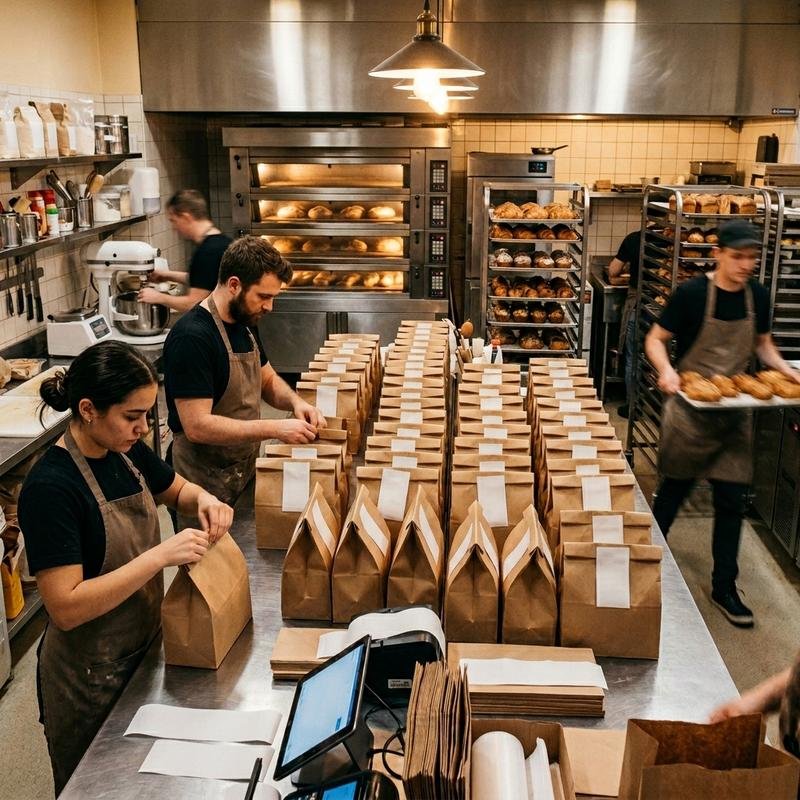
The commercial calendar reinforces it. Rakhi, Diwali, Christmas and community observances like Navratri and Paryushan are the highest-volume windows in Indian baking — and they are precisely the periods when eggless demand hardens from preference into requirement, because celebration orders feed mixed gatherings where everyone must be able to eat. A bakery that can't produce festival-grade eggless product sits out the most profitable weeks of the year. A baker who can is booked solid for them.
This also explains a pattern our counselors hear weekly: bakers who trained abroad, or at classic egg-based Indian programs, coming back to re-learn their repertoire eggless because their actual customers won't buy what they were taught. Choosing an eggless-first education the first time simply skips that expensive detour. (Deciding between formats? Our honest comparison of campus vs online baking education covers when hands-on matters most — and eggless technique is the strongest case for hands-on there is.)
100% Eggless Baking Classes: What to Look For
Search interest in 100% eggless baking classes has grown for a simple reason: bakers have figured out that a two-day "eggless module" bolted onto an egg-based diploma doesn't build sellable skill. If you're evaluating programs, these five filters separate genuine eggless education from marketing:
1. Eggless-first, not eggless-adapted. Ask what percentage of hands-on kitchen hours are eggless production. In a dedicated program the answer is all of them; in a classic program it's often a single-digit percentage.
2. The full repertoire, not just sponges. Any school can demo an eggless vanilla cake. Ask specifically about meringue-based work (macarons), choux, entremets and laminated pastry — the products from the previous section. Hesitation is your answer.
3. Formulas in grams and percentages. Eggless tolerances are narrow; cup-measure teaching guarantees inconsistency. Professional programs teach ratio math so you can scale and modify commercially.
4. Failure diagnosis, not just recipe-following. The seven collapses in this article are learned fastest when a chef stands at your bench and shows you which job went missing in your bake. Batch size decides whether that happens — at Truffle Nation's Delhi campus the ratio is one chef per eight students, which is the difference between being taught and being processed.
5. The business layer. Eggless skill is worth most when it becomes a bakery. Programs that include costing, pricing and launch strategy — as our 6-month diploma does — turn technique into income instead of leaving you with skills and no plan.
Truffle Nation's Delhi campus runs India's dedicated 100% eggless professional curriculum — every technique in this article is taught eggless-first, because that's the version the Indian market actually buys. The simplest way to evaluate it is to book a free demo class and watch the method at the bench before committing to anything.
The 5 Competencies That Make Eggless "Click"
Whether you train formally or self-teach, this is the order in which the skill actually assembles. Practise them in sequence — each one compounds the last:
The substitution map
Know 10+ substitutes by function, not name — the table above, internalised until diagnosis is automatic.
Batter balance
Read any recipe as ratios so you can rebalance after removing eggs — restore the water, fat and protein they took with them.
Aeration without eggs
Mechanical creaming, chemical leavening systems, and aquafaba meringue — three routes to lift, chosen by product.
Setting without eggs
Starches, agar systems and chocolate's own setting power for creams, custards and mousses that slice clean.
Moisture management
Syrups, invert sugars and storage discipline — because eggless bakes hold less bound water, and shelf life is a business skill.
Competencies one and two are theory you can start tonight. Three through five are hands skills — they live in your palms, not your notes, which is why the bakers who master them fastest are the ones with a chef watching their technique in real time.
Your First 30 Days: A Practice Plan That Actually Compounds
If you're starting tonight, here is the sequence our chefs recommend to self-starters — the same logic the campus curriculum follows, compressed into a home-kitchen month. The order matters more than the effort: each week's skill is the diagnostic tool for the next week's failures.
Week 1 — one recipe, five ways. Take a single vanilla sponge and bake it five times: yogurt-soda, condensed milk, buttermilk-vinegar, flax, and commercial replacer. Same pan, same oven, notes on each crumb. By Sunday you will understand the substitution map in your hands, not your head — and you'll have discovered that your oven, your yogurt and your flour all have opinions the internet's recipes never met.
Week 2 — break things on purpose. Rebake your best version four times, sabotaging one variable each time: double the soda, skip the starch, cold oven, overmix. You are building the failure library from the seven-collapses table above. Professionals diagnose fast because they've seen every failure; this week buys you that sight for the price of four cheap batters.
Week 3 — leave cakes. One starch-set pastry cream, one agar-set chocolate mousse, one batch of flax-bound cookies. Three different setting systems, three different products. This is the week most self-taught bakers never take — they stay in cake-land for years — and it's the week that separates "makes nice eggless cakes" from "runs an eggless menu."
Week 4 — one expert-rung attempt. Reduced-aquafaba meringue, then macarons if it holds. Expect the first batch to fail; that's the tuition. Document what the failure looked like and match it against the diagnostic table. Whether or not the shells have feet by day 30, you'll know exactly which questions to bring to a chef — which makes any training you invest in afterwards land twice as hard.
A month like this, done honestly, puts you ahead of most hobby bakers in the country. It will also show you precisely where the ceiling of self-teaching sits: the hands-skills — macaronage feel, batter-stage reading, lamination temperature — that need a trained eye watching you work. That's the point where a demo class at the Delhi campus stops being marketing and starts being the fastest next step.
Frequently Asked Questions
Conclusion: Hard Is the Opportunity
Eggless baking is harder than baking with eggs — six jobs to re-engineer, narrower tolerances, failures that only reveal themselves in the oven. That difficulty is precisely why it's valuable. In a market where most of your customers demand eggless and most of your competitors improvise it, the baker who has genuinely mastered the function-first system owns something scarce.
You can build that mastery the slow way — years of trial batches and internet contradictions — or the direct way: at a bench, with a chef, in a curriculum built eggless-first from day one. If you're serious about it, come watch the method live before you decide anything.